

Featured
Building the field, movement, and practice of the next system
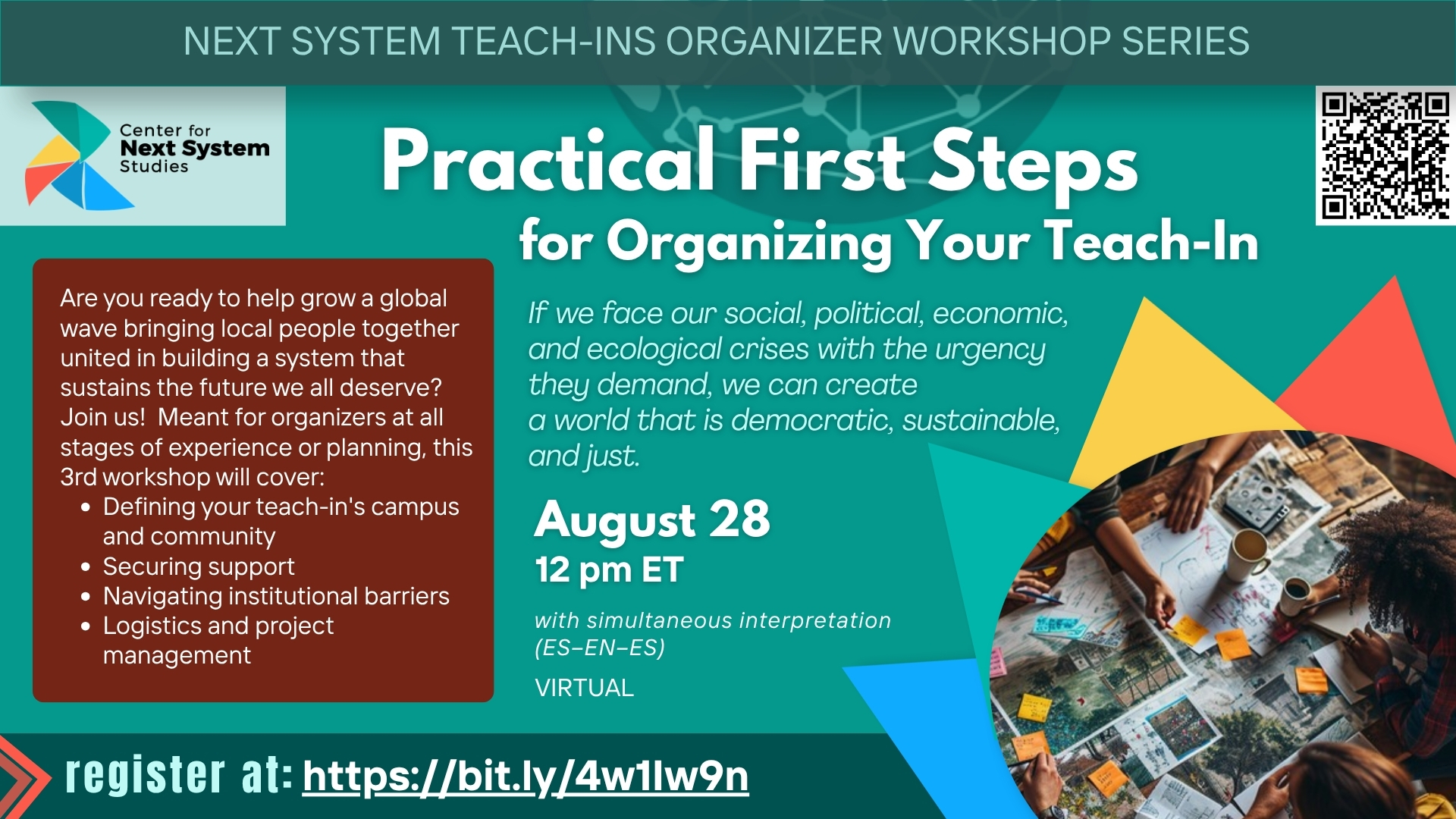
Next System Teach-Ins Organizer Workshop #3: Practical First Steps for Organizing Your Teach-In
This upcoming workshop is a practical, nuts-and-bolts session for organizers at any stage — walking participants through audience mapping, resource-securing, navigating red tape, and managing every moving part of a teach-in. Featuring contributions from Dr. Ben Manski (NSS); Suren Moodliar (encuentro5); Dr. Kathryn Milun (UM-Duluth); Lizah Makombore (UVM); Dr. Aimee Loiselle (SNDHE); Chris Lopez, Stephen Monroe Tomczak, and Alberto Cifuentes (Southern Connecticut State University), we will define campus and community, as well as how to secure sponsors and troubleshoot institutional barriers. The session will break down the essential logistics: timelines, roles, venue, promotion, and day-of coordination, leaving organizers with a clear action plan. There will also be space to share updates and questions with peers.
Next System Studies
The most recent news from the Center for Next System Studies
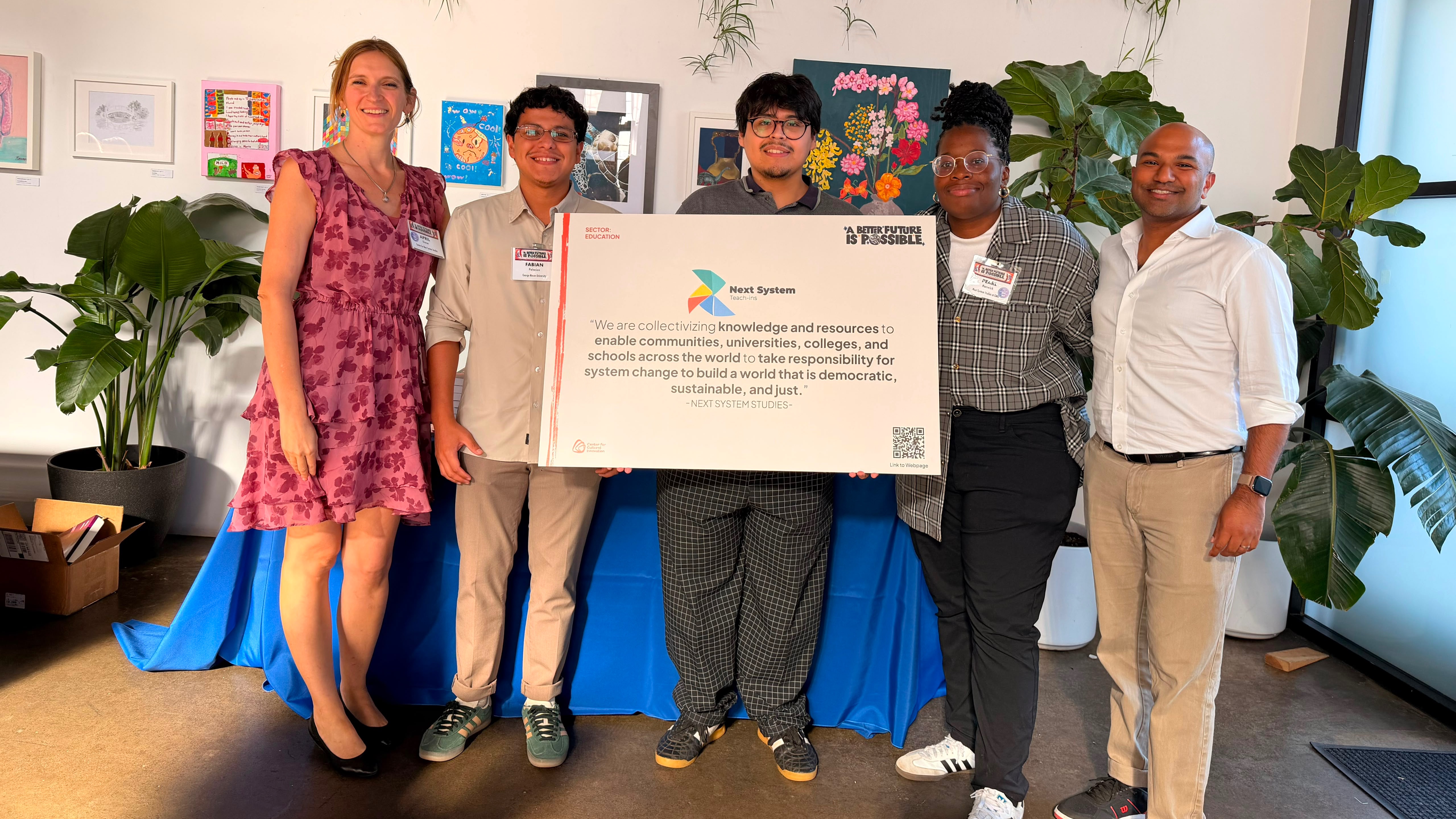
Report back from the Center for Cultural Innovation’s Convening: A Better World is Possible
On July 30, 2026, a delegation from Next System Studies attended the Center for Cultural Innovation's convening in Berkeley, which explored collectively-owned systems across sectors including art, education, health, finance, and housing. The event featured a solidarity fair and a World Building Design Lab where participants designed cooperative solutions to sector-specific scenarios. The delegation found a broad appetite for next-system conversations, affirmed the value of academic frameworks while noting the need for bridge-building with grassroots practice, and left with new connections and strengthened commitment to community-directed work.
Next System Teach-Ins Organizer Workshop #2: Why Next System Teach-Ins?
The latest Next System Teach-Ins Organizer Workshop brought together activists and community leaders to learn how teach-ins can turn local struggles into system-changing movements, and about the Next System framework as a timely tool for our era. Dr. Ben Manski traced the lineage of teach-ins from Vietnam War protests to the first Earth Day, April Doner reported on lessons from the November 2025 wave, and organizers Matt Epperson of Atlanta, GA and Lizah Makombore from Vermont shared how their April 2027 teach-ins will advance work on housing, climate justice, and solidarity economies in their communities. Participants shared it was a rich, practical session that left them with both the historical grounding and the concrete tools to start planning their own.
Cities in Struggle: Resistance and System Change
What happens when the push for participation expands while actual popular power shrinks? That was the central tension explored in a panel on "Community Power and the Next System" at June's Alternative Futures and Political Protest conference in Manchester, featuring Nara Roberta Silva on participatory budgeting's paradox, Ben Manski on municipal socialism's deep U.S. roots and the current authoritarian crisis, and Hillary Wainwright on the Greater London Council's strategy of using state resources to build popular power from below.
Theorizing Next System Design and Community Power
A recent panel at the Alternative Futures and Political Protest conference brought together Simon Thorpe, Martin Greenwood, Claudia Firth, and Carys Hughes to explore how community power can shape the next system, exploring examples from Spain's municipalist experiments to Venezuela's communal state project, public service ecologies, and the politics of collective enterprise. The session tackled the strategic question of how institutions can be used not to discipline, but to prefigure and build collective agency.
Ecozoic Conferencing
Why do so many professional gatherings leave us feeling drained when they could leave us feeling inspired? That's the question at the heart of this episode of Radio Ecozoic, which features Dina Spigelski from Leadership for the Ecozoic and Deissy Perilla from the Center for Next System Studies sharing hard-won lessons on designing conferences, retreats, and team gatherings that actually energize people. From choosing connection-fostering locations to building planning committees that share responsibility to making space for play alongside serious intellectual work, they offer practical, concrete advice for anyone tired of exhausting, over-scheduled events.
System Design
Ideas and news about alternative designs for a next system
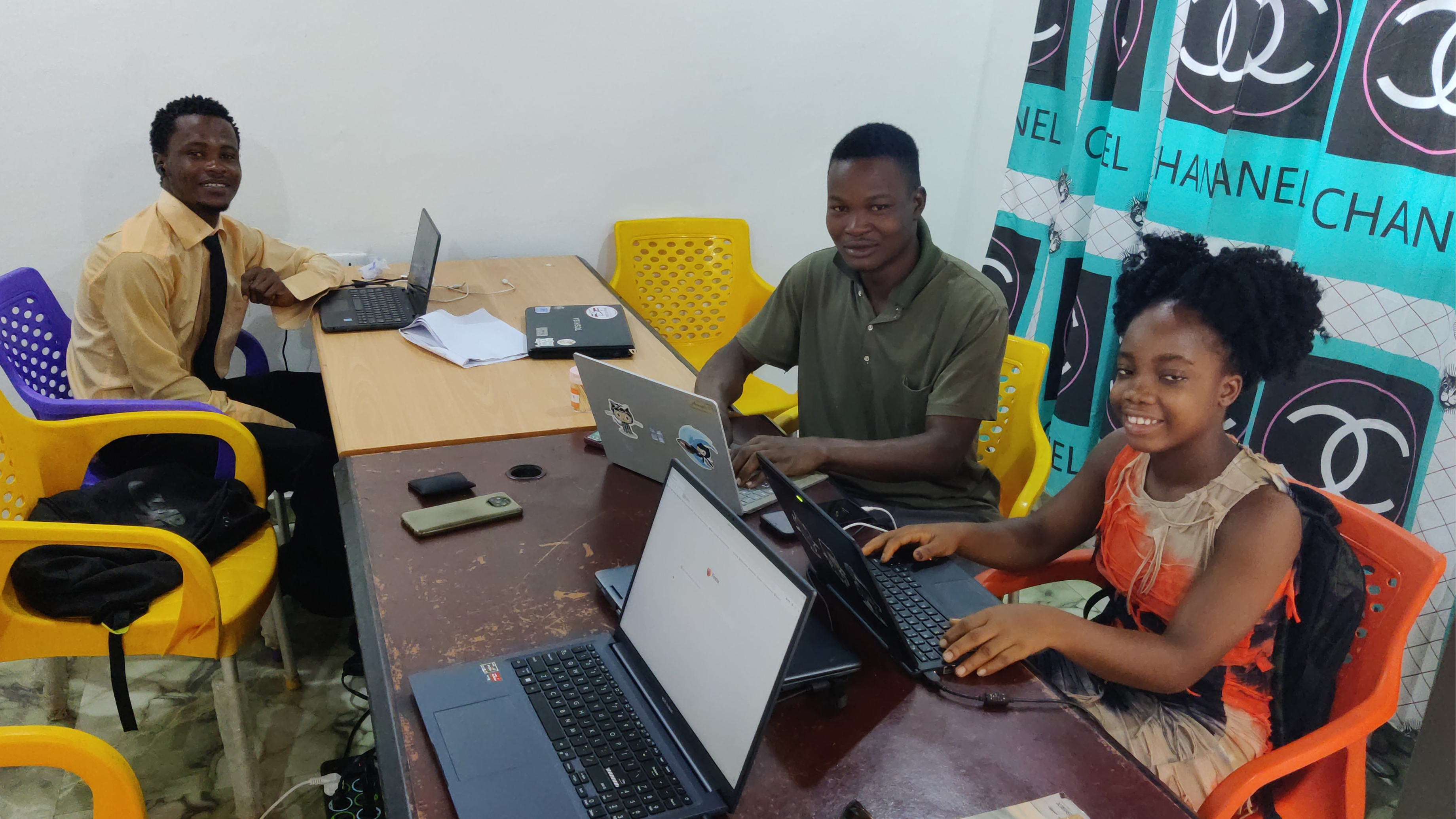
Toward a Social Justice Computing School in Liberia
A presidential election killed the original plan for a social justice computing school in Liberia, but the dream refused to die. Jeff Elkner writes from Monrovia about how the Jetro Web Development cooperative is now navigating land ownership, legal structures, and the solidarity economy to build a school from the ground up. With a Next System Teach-In on the horizon, it's a rare glimpse into what it actually takes to build alternatives when the state won't help.
NYC Tenants in Co-Governance
In a recent Convergence Magazine podcast, host Cayden Mak spoke with tenant organizers Ritti Singh, Lex Rountree, Irene Hsu, and Joanne Grell about a New York City campaign to freeze rent that gained traction during the 2025 mayoral race. The campaign's language and values were adopted by then-candidate Zohran Mamdani, who later became acting mayor. Since taking office, Mamdani has replaced six of nine seats on the city's Rent Guidelines Board, which sets rent control policy, though a full rent freeze has not yet been implemented. The episode explored how the campaign became part of a broader effort to develop movement-driven co-governance in the city.
The NYU Strike Showed How to Reverse the Downward Spiral in Higher Ed
Nearly 1,000 non-tenured NYU faculty walked out for two days in March 2026 and won. Their new contract guarantees the highest minimum salaries of any unionized non-tenure track faculty in the country, along with 3.5% annual raises and long-term job security. Peter Cole reports for In These Times on how a decade of organizing, a two-day strike, and a simple slogan — "teachers' working conditions are students' learning conditions" — flipped the script at the nation's largest private university.
Rewriting the AI Narrative: from Paralysis Towards Radical Imagination
May First gathered its community for a webinar on rewriting the AI narrative: moving from paralysis and fear toward radical imagination in a moment of rising fascism. Participants heard an analysis of Trump's executive orders accelerating data center development, weighed in through polls on their own AI use and political stance toward the technology, and shared perspectives via open-mic interventions. The session ended with a suite of resources — from the "People Say No" report to organizing toolkits — offering practical paths for communities to direct technology rather than be directed by it.
Everyone's AI
OpenAI has 23 million users in South Korea, but fewer than two million pay; a dependency that could vanish with a pricing change or export restriction. So Seoul is building Everyone's AI: a free public chatbot, running on domestic models, that every resident can use without paying through 2028. CommonBytes examines the promise (public infrastructure for the AI age) and the peril (weak privacy safeguards, surveillance risks, and a funding model that anticipates monetizing user data).
Systemic Movements
What do our movements know and what are they learning?
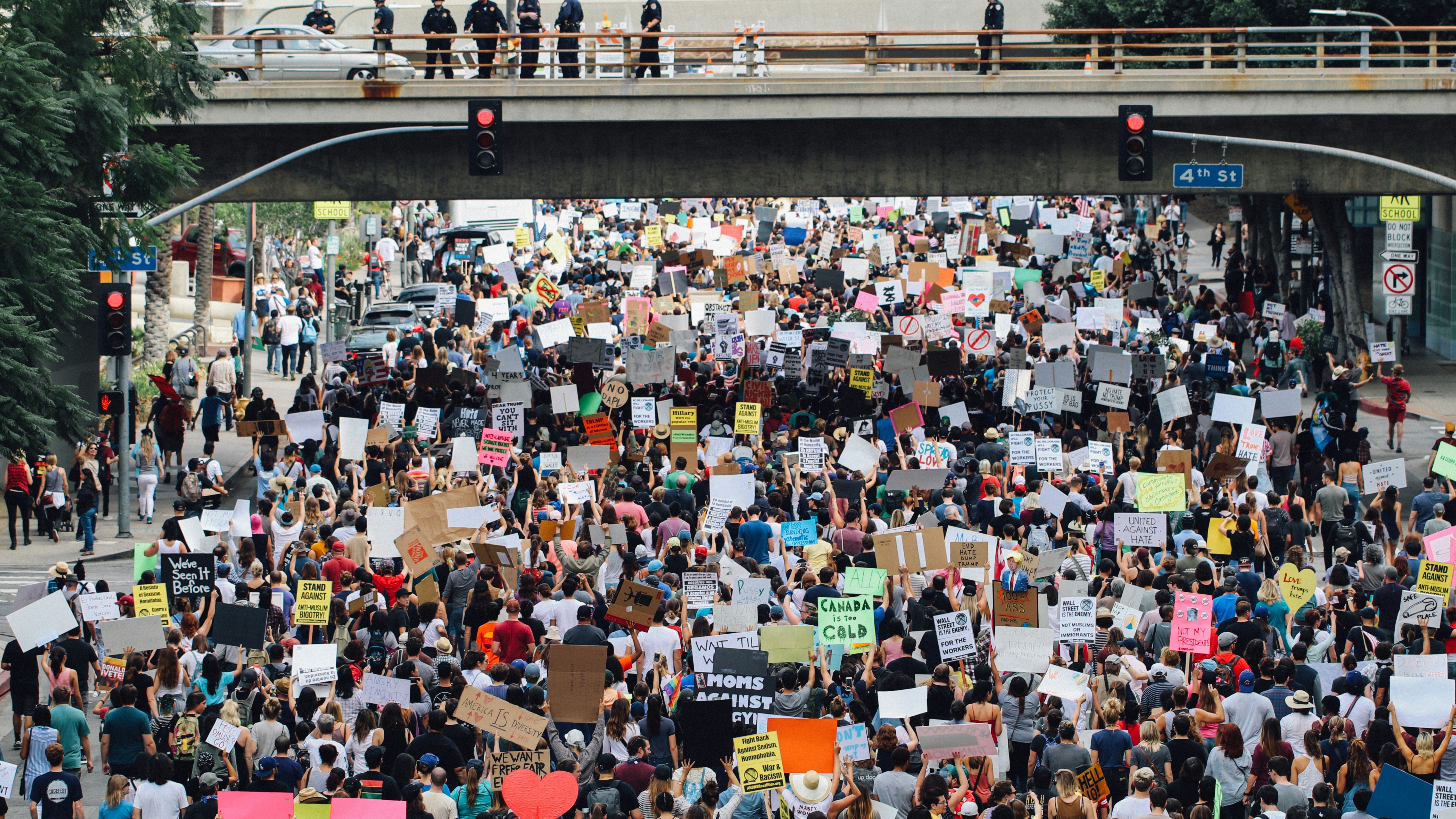
Society on Strike: A Last Defense Against Tyranny?
Jeremy Brecher opens his forum by defining "social strikes" (large-scale nonviolent disruption including general strikes, boycotts, blockades, and commercial shutdowns) as a potential last defense against authoritarian rule. He outlines the conditions under which such actions might become necessary: when electoral politics fail, institutions are dismantled, and repression silences dissent. While acknowledging that the U.S. lacks a deep tradition of such uprisings, he draws on historical precedents from other countries and identifies the preconditions (public rage, local organizing capacity, regime divisions, and the failure of conventional resistance) that could bring a social strike onto the American agenda.
Response #1 to Society on Strike
Dr. Ben Manski pushes back against Brecher's framing of social strikes as unpredictable, arguing that activist knowledge gives us real predictive power. He offers four forecasts: organized cities, led by public-sector and service-worker unions, will spearhead the coming strike; broad coalitions will sustain protests in the tens of millions; the regime will deploy significant violence to disrupt the 2026 midterms; and by 2027, the U.S. may face competing claimants to national power. He emphasizes the need for preparation and a "next system" rooted in community power and solidarity economies.
Response #2 to Society on Strike
Dr. William Robinson supports Brecher's call but places it within a larger structural critique: Trumpism is not an aberration but an embryonic fascist state driven by a transnational capitalist class fusing Silicon Valley, the Pentagon, and Wall Street. His central warning is that a social strike must not aim simply to restore pre-Trump Democrats, who are themselves complicit in the neoliberal order that produced this crisis. Instead, he argues, the strike must carry an explicit working-class, anti-capitalist agenda that addresses material deprivation and wins over the MAGA base through economic solidarity, not just procedural democracy.
7 Lessons From the U.S. and Brazil for Durable Democracy
Suren Moodliar – in conversation with Dr. Aldon Morris and Dr. Nara Roberta Silva – discusses the Trump administration’s campaign against the Smithsonian Institution as part of a broader effort to reshape public institutions and historical narratives in his recent piece for Common Dreams. Drawing on comparisons between the U.S. and Brazil, both countries with recent contested elections and multi-racial democracies, Morris and Silva argue that authoritarianism is not inevitable and that democracy only endures when ordinary people act. They identify several lessons for durable democracy: transforming moments of crises into collective action; building movement infrastructure; employing creative and disruptive tactics; using truth and hope as social movement resources; globally interconnecting movements for democracy. Moodliar ends by asserting that the next democratic turn will not be granted from above but ignited from below.
Organizing Youth Under Fascism: A Conversation with Dream Defenders
Dream Defenders co-executive director Nailah Summers-Polite, in conversation with Akin Olla, discusses the organization's work with young people in Florida in a recent Convergence Magazine interview. Describing a climate of fear on college campuses due to anti-protest legislation and students facing expulsion for demonstrations, she notes that activism has not reached 2020 levels due to repression, economic hardship, and pessimism. She emphasizes that youth retain influence, pointing to shifts in discourse around corporate power and Gaza. Summers-Polite also notes that some funders have withdrawn support from youth organizing in Florida and that Dream Defenders reduced staff in 2024. She called for organizers to meet young people where they are, invest in leadership development, and increase resources for movement-building in the South.
Countering the BJP: Why India's Left Must Rebuild Mass Movements
In a BreakThrough News interview, Subhashini Ali discussed the Bharatiya Janata Party (BJP)'s rise in India, attributing it to global shifts after the Soviet collapse that enabled market-driven and divisive politics. She describes the Sangh Parivar as advancing pro-monopolist policies through a religious nationalist framework while preserving caste hierarchies. Ali notes that religious polarization has weakened trade unions and radical movements despite rising unemployment and hardship. She also observes class divisions among youth protesters and cautioned against the uncritical use of terms like "Gen Z," urging the left to support youth activism without trying to co-opt or lead it.
System Crises
The crises and the crisis of our world system
Conceptualizing Security in a Time of Deep Civilizational Crisis
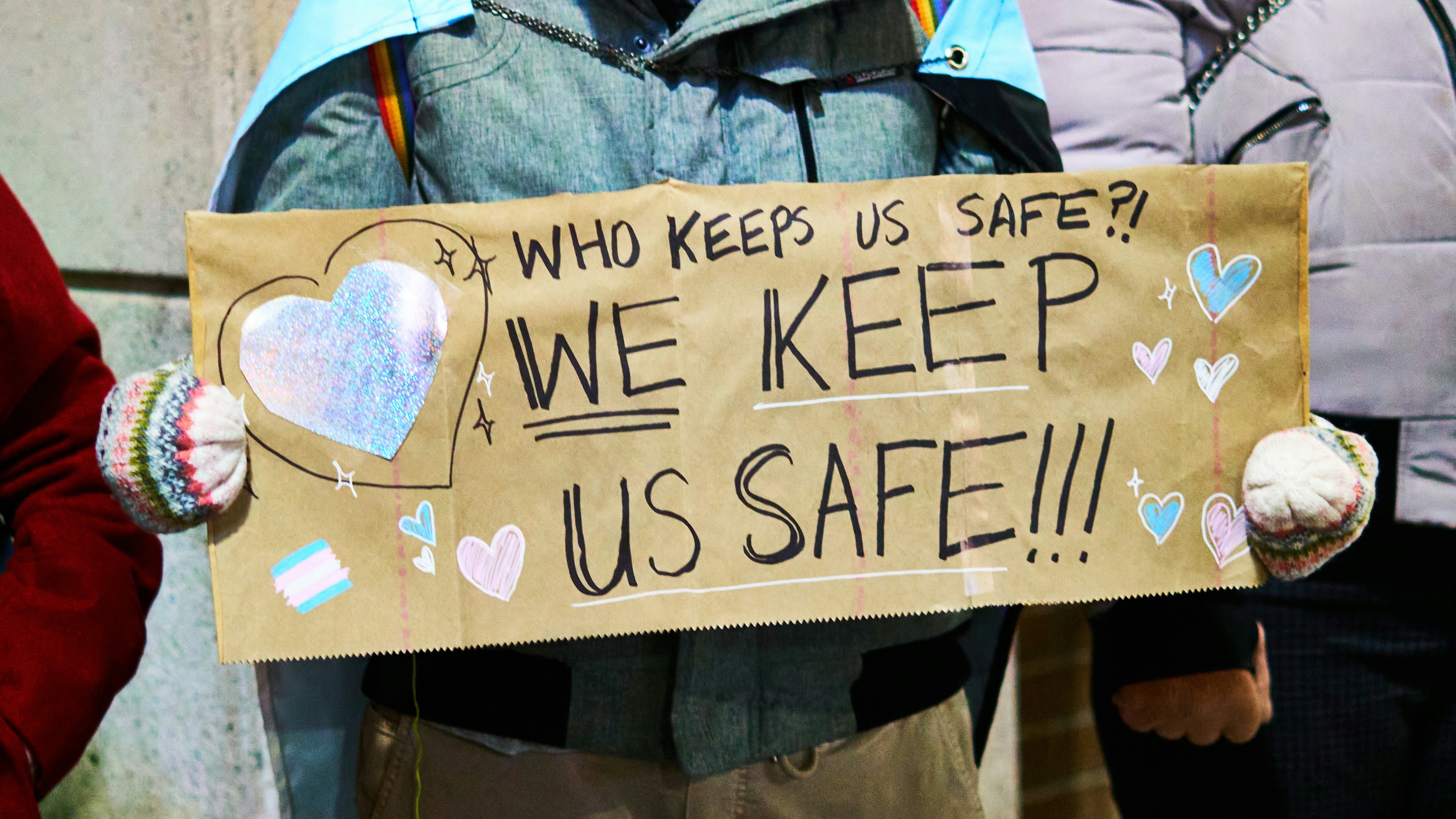
How are communities around the world building safety and protection without the state? The Global Tapestry of Alternatives kicked off its Alternative Security webinar series last month with Manuel Rozental and Dipa Sinha, moderated by Madhuresh Kumar — a cross-regional conversation on autonomy, care, territorial defense, and what security looks like when it's rooted in life, not militarization. It's the first of three sessions asking not how to reform the system, but how to replace it from below, and the full recording is now available.
Who Teaches Politics Now? Universities, YouTube, and the Making of Common Sense
In her recent article, sociologist Emine Fidan Elcioglu examines why some young racialized voters in Canada have shifted their political views while others with similar backgrounds have moved in a different direction. Drawing on interviews, she found that this divergence is partly attributable to where people learn about politics. Some encountered university classrooms that framed inequality as structural and systemic, while many more learned through algorithm-driven platforms where content creators offered individualistic explanations rooted in personal responsibility. The article situates this shift in the decline of unions, parties, and community organizations that once provided sustained political education, with digital platforms increasingly filling that role and normalizing certain perspectives as common sense over time.
We May Be Entering a Second Axial Age
The first Axial Age gave us the world's great wisdom traditions by turning human beings inward toward moral reflection and universal ethical principles. Now, in the face of climate chaos, war, and AI, we may be entering a second Axial Age this time demanding a collective shift in consciousness rather than an individual one. This Noema essay argues that AI's "intelligence without interiority" is depleting our social soil, but that regenerative currents from Goethe to Highlander Folk School point toward a future where we rebalance artificial, organic, and source intelligence to cultivate human flourishing.
Minnesota Trade Unionists Are Among the Federally Indicted ICE Observers
Minnesota unionists who showed up to observe and document ICE are now among 15 people facing federal conspiracy charges and labor leaders are calling it a political crackdown designed to chill worker solidarity. Sarah Lazare and Amy Livingston cover the case for Workday Magazine, detailing how a network of worker assemblies triggered a prosecution that one union president says is meant to make workers afraid to speak out. It's a stark look at how the state is using the courts to target the labor movement's most basic acts of mutual defense.
System Change
Pathways and strategies for the next system

Popular Education in Dark Times – Critical Learning for Transformative Action
The Global Working Group Beyond Development has launched three free online courses — "Beyond Development," "Cities of Dignity," and "Reparations" — as part of their "Popular Education in Dark Times" series. Designed for activists, educators, and organizers, the courses offer toolkits for thinking and acting on systemic transformation across continents and contexts. This webinar recording features course designers Miriam Lang, Mabouka Embarek, and Elise Klein, with commentators Vasna Ramasar, Gabriella Cabana, Nnimmo Bassey, and Rainatou Fatanougbo.
Leading Place-Based Community Engagement Initiatives In Higher Education: Promising Practices and Lessons Learned
This edited collection spotlights the leadership behind contemporary examples of place-based community engagement in higher education. Through various first-person narratives, leaders from diverse institutions provide an insider’s perspective on addressing complex issues such as educational inequity, public health disparities, housing insecurity, gentrification, and cultural preservation.
What If Socialism Takes Over the Democratic Party?
John Judis, a relentlessly unenthusiastic realist who's been watching American politics for decades, recently predicted that in ten to fifteen years, the Democratic Party could be known as "democratic socialist" the way it's now known as "liberal." Corey Robin, Distinguished Professor of Political Science at Brooklyn College CUNY, takes up that thought experiment in Jacobin with two crucial tweaks: questioning whether the Democratic Party will survive at all, and noting that "liberal" has been the dominant left-of-center ideology for about a century.
Events
Upcoming events
Featured Event:
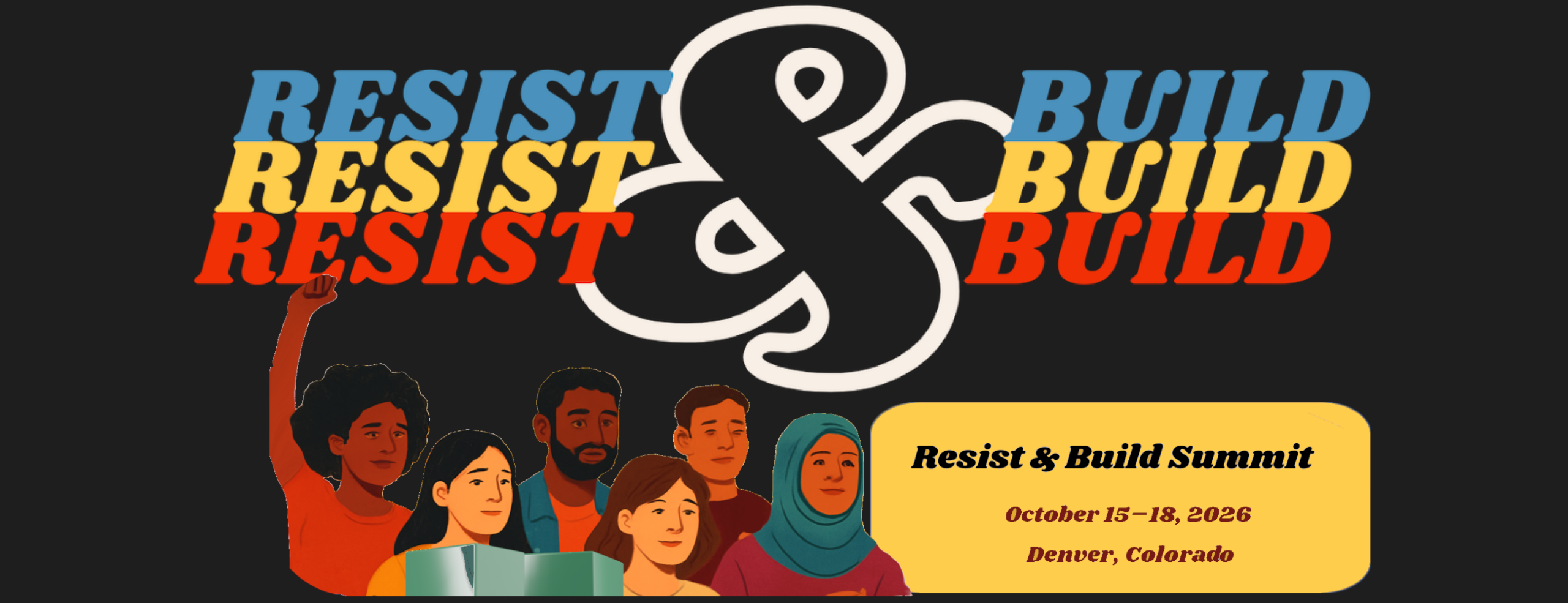
Resist & Build Summit: Solidarity at Scale: Converging Movements for System Change
October 15–18, 2026 in Denver, CO United States
The Resist & Build Summit returns this October (15–18) and Next System Studies continues as a sponsor. The event brings together hundreds of organizers, cooperators, and movement strategists to converge our struggles for a post-capitalist world. With workshops, open spaces, and plenaries focused on everything from solidarity economies to decolonial strategy, the summit is designed to strengthen networks, sharpen analysis, and build the relationships we need to scale up system change. Registration is now open.
Governance for Liberation: Making Decisions, Sharing Power, and Agreeing Online
August 18, 21, 25 & 28 and September 1 & 4, 2026 (virtual)
Governance for Liberation is a six-session virtual workshop on democratic decision-making for people working collectively. Facilitated by Mike Strode and Alex Rodriguez, this session introduces sociocratic principles and practices for shared governance, including consent-based decision-making, role clarity, distributed authority, and online collaboration. This participatory training is designed for cooperative members, organizers, nonprofit staff, grassroots collectives, and anyone seeking practical governance tools.
Protect Elections: Defend Democracy Trainings
August 26 & 28 and September 2, 2026 (virtual)
States at the Core (STAC) is offering a series of trainings to prepare communities for the challenges facing the upcoming midterm elections. STAC aims to equip participants with strategies to protect the integrity of the electoral process while building a proactive, community-based response that extends beyond ballot counting. Sessions will cover anticipating and addressing election-related threats, strengthening local organizing capacity, and connecting electoral defence to broader democratic engagement, leaving participants with practical tools and strategies for their communities.
Journeys of Growth & Belonging
August 28, 2026, 9:30 AM ET (virtual)
On August 28, Designed Learning presents the next Journeys of Growth & Belonging session with April Doner, Director of Field and Community Building for Next System Studies, as well as an artist and community organizer whose work blends Asset-Based Community Development, storytelling, and neighborhood organizing. April will share her approach to building life-giving change from the neighborhood outward, followed by small-group discussions on community, abundance, and belonging. This session is for anyone interested in grassroots transformation—organizers, educators, artists, and neighbors alike. Join Designed Learning August 28 for a space filled with stories, connections, and practical insights.
Next System Teach-In Organizer Workshop #3: Practical First Steps for Organizing Your Teach-In
August 28, 2026, 12:00PM ET (virtual)
This is a practical workshop designed to help organizers at any stage turn their Teach-In plans into reality. The session will cover four areas: defining your teach-in’s campus and community; partners and constituencies; securing support and approaching potential sponsors; navigating institutional barriers; and managing event logistics–leaving participants with the confidence to organize their own Teach-In.
Asset Based Community Development (ABCD) Essentials for Practitioners
September–October, 2026 (virtual)
These trainings are dynamic workshops introducing the core principles and applications of ABCD in the context of local communities. They're led by experienced ABCD Institute facilitators. Presentations and discussions occur in light of current conversations about belonging and social justice and enable participants to think deeper about responses to these challenges. Practitioners will learn and apply: Learning Conversations (1:1s), Asset Mapping, Community Engagement Strategies, Power Ladders, Capacity Inventories, and how organizations can lead by stepping back.
The Art of Solidarity Cohort
September 15, 2026 (virtual & in person)
The Art of Solidarity is a six-month experiential cohort for creative individuals with access to excess wealth, using artistic and embodied practices to deepen their role in wealth redistribution and solidarity economy organizing. Participants meet twice monthly, with an in-person immersion, to develop a personal work of art about their journey that shifts the narrative about how we move resources and take care of each other. Led by Art.coop's Robin Crane and Marina Lopez, the $3,000–$5,000 contribution supports the Remember the Future Fellowship; applications are due September 15 and the cohort begins October 2026.
Capra Course
September 16, 2026 (virtual)
Starting September 16, Fritjof Capra's “Capra Course” offers twelve pre-recorded lectures with supplementary materials to teach systems-thinking tools for interconnected global problems like climate change and inequality. The course integrates biological, cognitive, social, and ecological dimensions and is designed to provide a framework for understanding systemic challenges and recognizing corresponding solutions being developed worldwide.
Charter for Compassion Global Youth Conference
September 23–24, 2026 (virtual)
The third annual Charter for Compassion Global Youth Conference is convening young leaders from around the world this October to explore what justice looks like when it's rooted in courageous, accountable compassion. With youth-led sessions, intergenerational workshops, and themes ranging from climate justice to decolonization to systems change, it's designed to move participants from inspiration to sustained action. Proposals to lead a session are open through August 18 and the conference is free to attend.
Convergence for Just Futures 2.0
September 23–25, 2026 in Chicago, IL United States
Hosted by Muslims for Just Futures, Convergence for Just Futures 2.0 will bring together organizers, advocates, and communities to address the 25-year expansion of the post-9/11 legal and security framework. The framework has extended beyond its original scope to affect free speech, immigration, social movements, and community organizing by using administrative, legal, financial systems in ways that disproportionately impact marginalized communities. Convergence for Just Futures 2.0 aims to develop collective strategies and responses to these ongoing developments.
Florida Interfaith Climate Actions Network — The Economy of Earth: Learning from Creation for Better Living
September 25–26, 2026 in Naples, FL United States
The Seventh Assembly of the Florida Interfaith Climate Actions Network (FL-iCAN!) will take place September 25-26, 2026 at Cornerstone United Methodist Church in Naples, Florida. The gathering will explore how natural lifecycles can inform the design of regenerative economies, moving beyond the conventional profit-extraction model toward systems that waste nothing. The program features expert speakers, breakout tracks, community organizing, spiritual exercises, justice field trips, and learning on topics including Beloved Creation, church gardening, local climate action, and interfaith practices.
Annual Conference of the Peace and Justice Studies Association – Global Fallouts: Moving Peace and Justice Forward in Times of Uncertainty
October 2–4, 2026 in Arlington, VA United States
The Peace and Justice Studies Association's 2026 conference, Global Fallouts: Moving Peace and Justice Forward in Times of Uncertainty, lands October 2-4 at George Mason University in Arlington, VA with a pre-conference day on October 1. It's North America's largest gathering of academics, practitioners, students, and activists working on peace and justice, featuring sessions that bridge research, teaching, and frontline organizing. Registration is open.
ISCTE 2026 – Social and Solidarity Economy and the Commons: Hacking Our Common Future: Transnational Cooperation Between Community-led Initiatives in a Fragmented World
November 4–6, 2026 in Lisbon, Portugal
From November 4–6 in Lisbon, the 6th International Conference on Social and Solidarity Economy and the Commons will explore how community-led initiatives are "hacking" existing systems to build transnational cooperation and common futures in a fragmented world. With a call for contributions across nine thematic fields — from digital infrastructures to more-than-human relations — the conference bridges research, practice, and activism in the solidarity economy movement. Proposals are now open for paper abstracts, session proposals, workshops, and an early-career research design workshop.