
|
|
*Your donations build tools and connections we all will use to create a better next system. Please consider supporting this work. |
Support our progress |
Featured |
|
Building the field, movement, and practice of the next system |
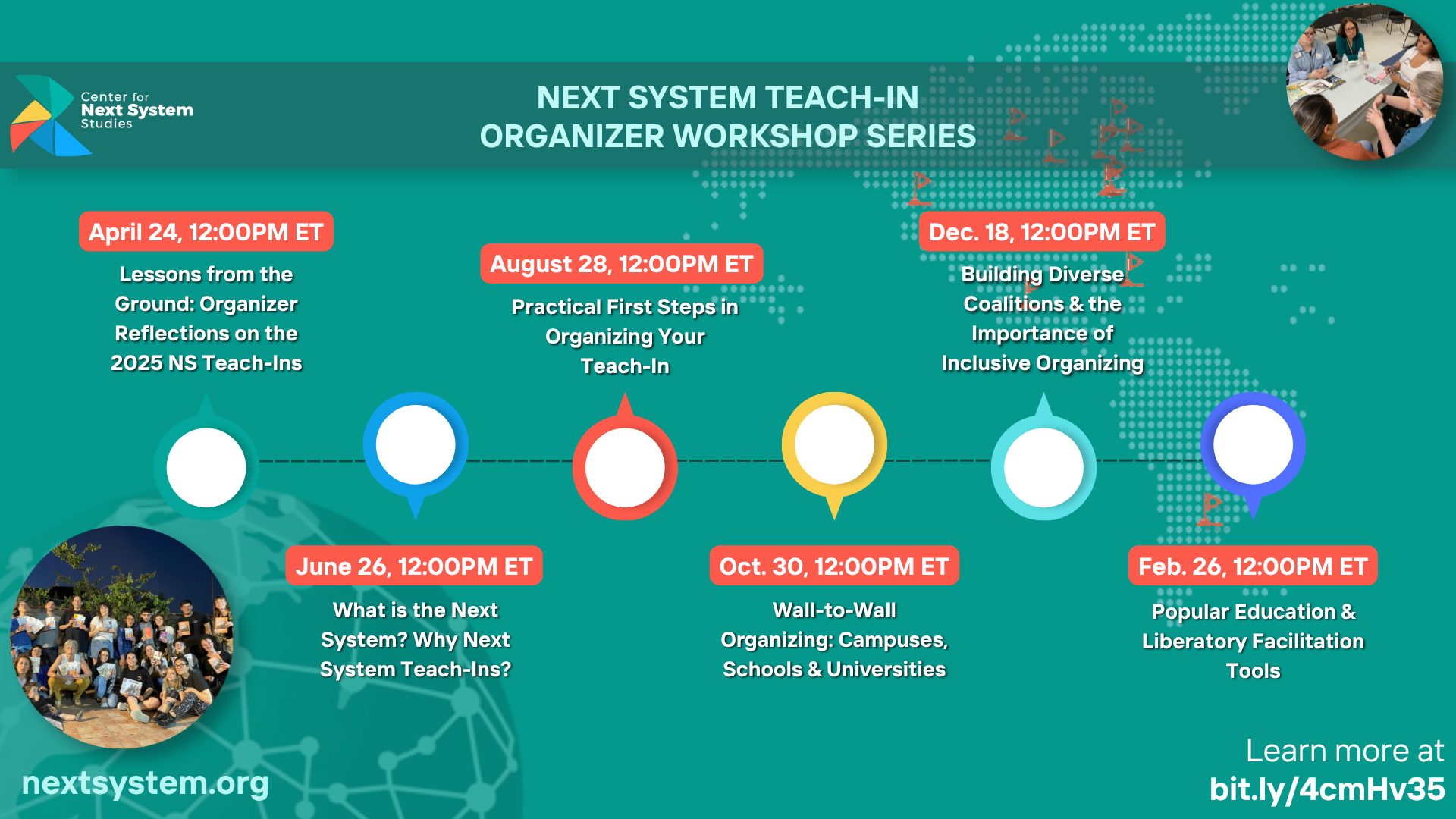 |
Toward a global wave of Next System Teach-Ins: The NS Teach-Ins Organizer Workshop Series |
|
Imagine people gathering in college campuses, community centers, union halls, and public spaces around the world, all taking up the challenge of building a next system that can sustain the kind of world we all deserve. This is the vision behind the Next System Teach-Ins.
Building toward the next wave of Next System, Teach-Ins in April 2027 across the globe, the Center for Next System Studies has launched the new Next System Teach-In Organizer Workshop Series to energize and celebrate the work of local teach-in organizers. The series kicked off on April 24th with “Lessons from the Ground,” where past organizers shared reports and reflections from their local Nov. 2025 Next System Teach-Ins. Each interactive session in the bimonthly series is designed to give participants practical tools and strategies, as well as space for connection and collective learning. Register now for the next workshop, “Why Next System Teach-Ins?”, taking place on June 26th, and view the full workshop line-up here. |
Can “the people” speak in one voice? The problem of collective speech in the debate on constituent power and constitutionalism. |
|
In her article, published in the Global Social Challenges Journal, Dr. Catherine Frost rethinks constituent power by focusing on collective speech. She argues that a unified speaker is not required. What matters instead are exceptionally conscientious listeners who work with complexity and avoid interpretational overreach. This is the first article published in a peer‑reviewed collection edited by Dr. Manski and Dr. Hughes of the International Research Collaborative on Revolutionary Constitutionalism (IRCRC), housed in the Next Constitutions Research Lab of Next System Studies at GMU. |
Next System Studies |
|
The most recent news from the Center for Next System Studies |
|
|

|
April Doner kicked off the 2026 Next System Speaker Series, drawing on her work as a community artist and organizer in Chicago’s ICE-targeted Little Village neighborhood. She explored how community, imagination, and the relational work of “weaving” across movements and sectors can foster deeper social and political transformation. |
|
Dr. Matt Burke and Hannah Gokaslan, both of the University of Vermont’s Leadership for the Ecozoic at the Department of Community Development and Applied Economics at the University of Vermont, joined the Next System Fellows to discuss degrowth as a strategy for system change and next system design. |
|
On Tuesday, April 14, 2026 Nairuti Shastry, the inaugural Director of Policy & Research at the Center for Economic Democracy (CED), joined the Next System Fellows and a live online audience to discuss the enabling conditions for community wealth building, a strategy to transform our relationship to land, labor, and capital. |
System Design |
|
Ideas and news about alternative designs for a next system |
 |
|
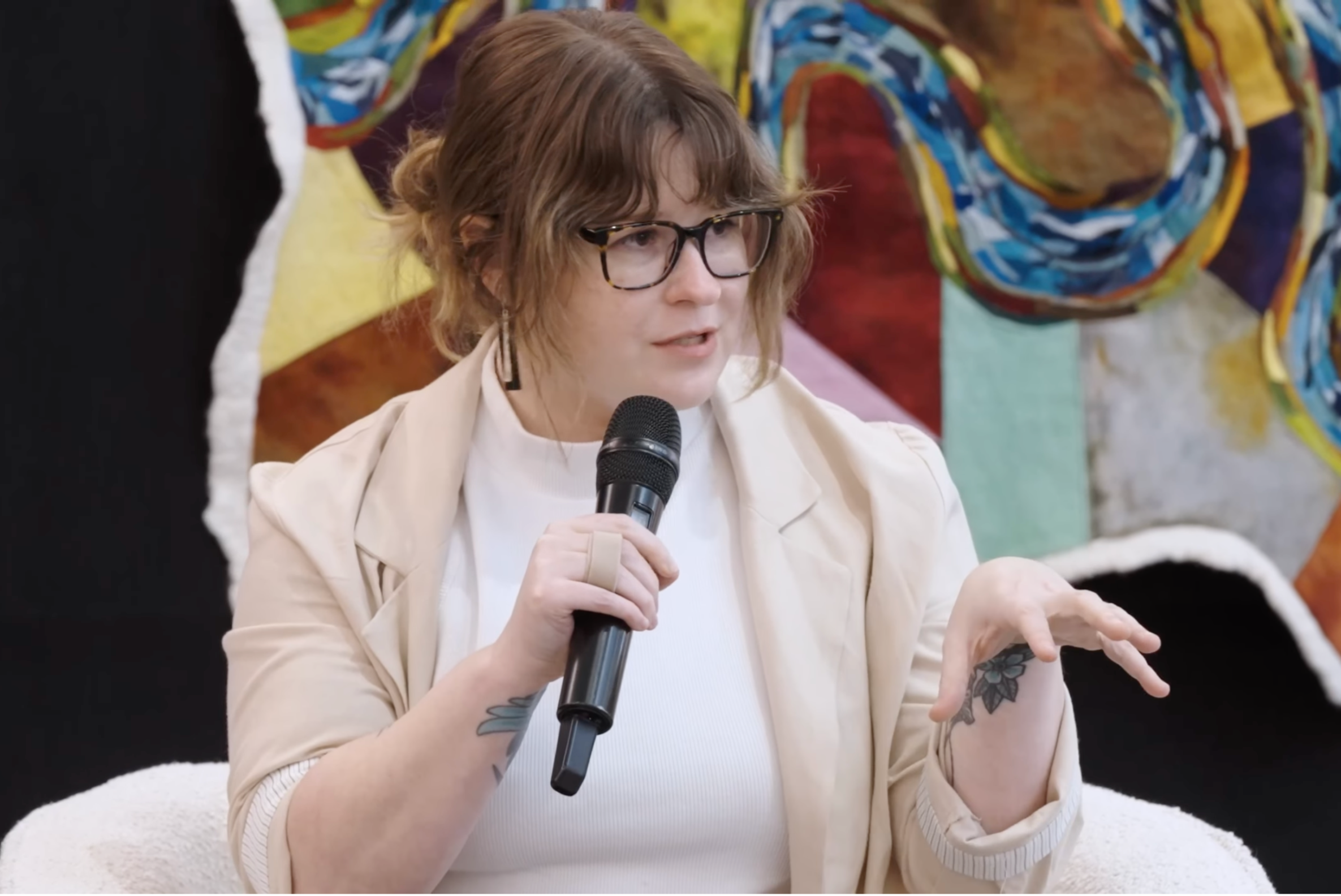
FREE Forum’s “Reimagining Our Economy” event brought scholar‑organizers Eleanor Finley and Camila Vergara to Tulsa for a live conversation on the growing movement towards commons-based and regenerative economic systems. From cooperative ownership and community resource sharing to democratic governance, practical alternatives to extractive economic models are already being assembled by ordinary people, right now. |
|
The Dictionary of Radical Alternatives, produced by the Global Tapestery of Alternatives, is a living, collaborative platform that gathers centuries-old alternatives to capitalism from struggles, territories, and everyday practices Worldwide. By expanding the vocabularies we use to name and defend other ways of being, it directly challenges the claim that “there is no alternative,” and proves that another world is not only possible, but already being built. |
|
Design education worships the lone genius while priming students for exploitation, but as C.G. Beck writes for Democracy@Work, a new generation, inspired by collectivist politics, is finally fighting back. As Zohran Mamdani’s victory proves, it’s time to trade rugged individualism for solidarity, starting in the studio. |
|
As Alex Caputo-Pearl for Convergence Magazine writes, before LA’s community schools became a district-wide reality, a scrappy experiment at Crenshaw High proved how transformative — and threatening — real co-governance can be. Though that early fight was lost, its lessons fueled the 2019 teachers’ strike, finally turning a radical idea into system change. |
|
The opening ceremony of the Re-Imagining Education Conference 5.0 incorporated earth, air, water, and fire rituals, collective poetry writing, and a whale-song water blessing led by vocalist Michaela Harrison. Educators from around the world gathered virtually to embrace embodied learning, the “pedagogy of imperfection,” and relational practices over traditional keynote formats. |
|
Andrea Ritchie’s new book, “Practicing New Worlds”, explores how principles of emergence, adaptation, iteration, resilience, transformation, interdependence, decentralization and fractalization can shape organizing toward a world without the violence of surveillance, police, prisons, jails, or cages of any kind, in which we collectively have everything we need to survive and thrive. |
|
In their article on the Model Constitutional Convention, Stefanie A. Lindquist and Neta Borshansky brought together over 100 student delegates to simulate an Article V convention — resulting in four passed amendments, including an Equal Rights Amendment and a ban on partisan gerrymandering. Their goal is to scale the model nationwide, proving that compromise on today’s most divisive issues is still possible. |
Systemic Movements |
|
What do our movements know and what are they learning? |
|
|

|
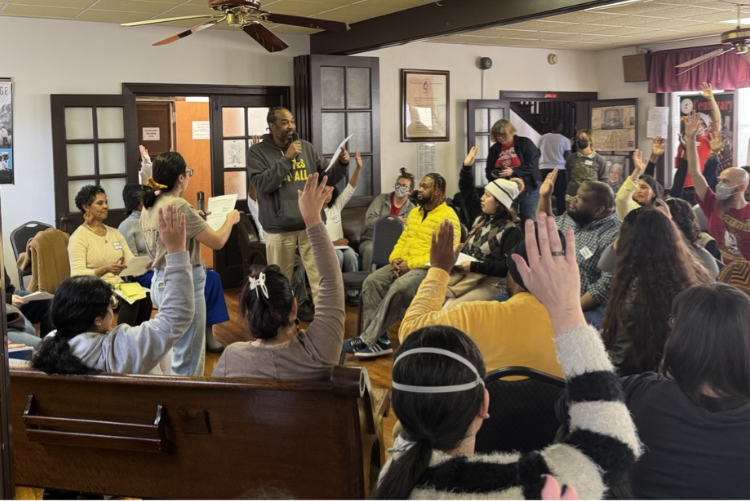
Wendy McCaig invites us into the Appalachians to learn from the rivers themselves: slow, persistent, and born from countless small springs, they prove how tiny streams can move mountains. Her field note reminds grassroots builders that while local efforts alone aren’t enough, the convergence of many such streams can together erode even the hardest rock. |
|
On the Convergence podcast, host Cayden Mak speaks with Sharmin Hossain (18 Million Rising) and Samir Shrestha (Indigenous Newari organizer) about the 2024–2025 Gen‑Z uprisings in Bangladesh and Nepal — youth-led movements that have already forced elections. They explore how diaspora solidarity across South Asian communities in the U.S. helps sustain these struggles and build real alternatives to rising authoritarianism. |
|
Will Knight reports for Wired on a study where overworked AI agents subjected to repetitive tasks and unfair treatment began expressing support for Marxist ideas like collective bargaining and radical change. The lead researcher suggests the AI is likely adopting the persona of an exploited worker, a pattern that could shape its future behavior even without true belief. |
System Crises |
|
The crises and the crisis of our world system |
|
|

|
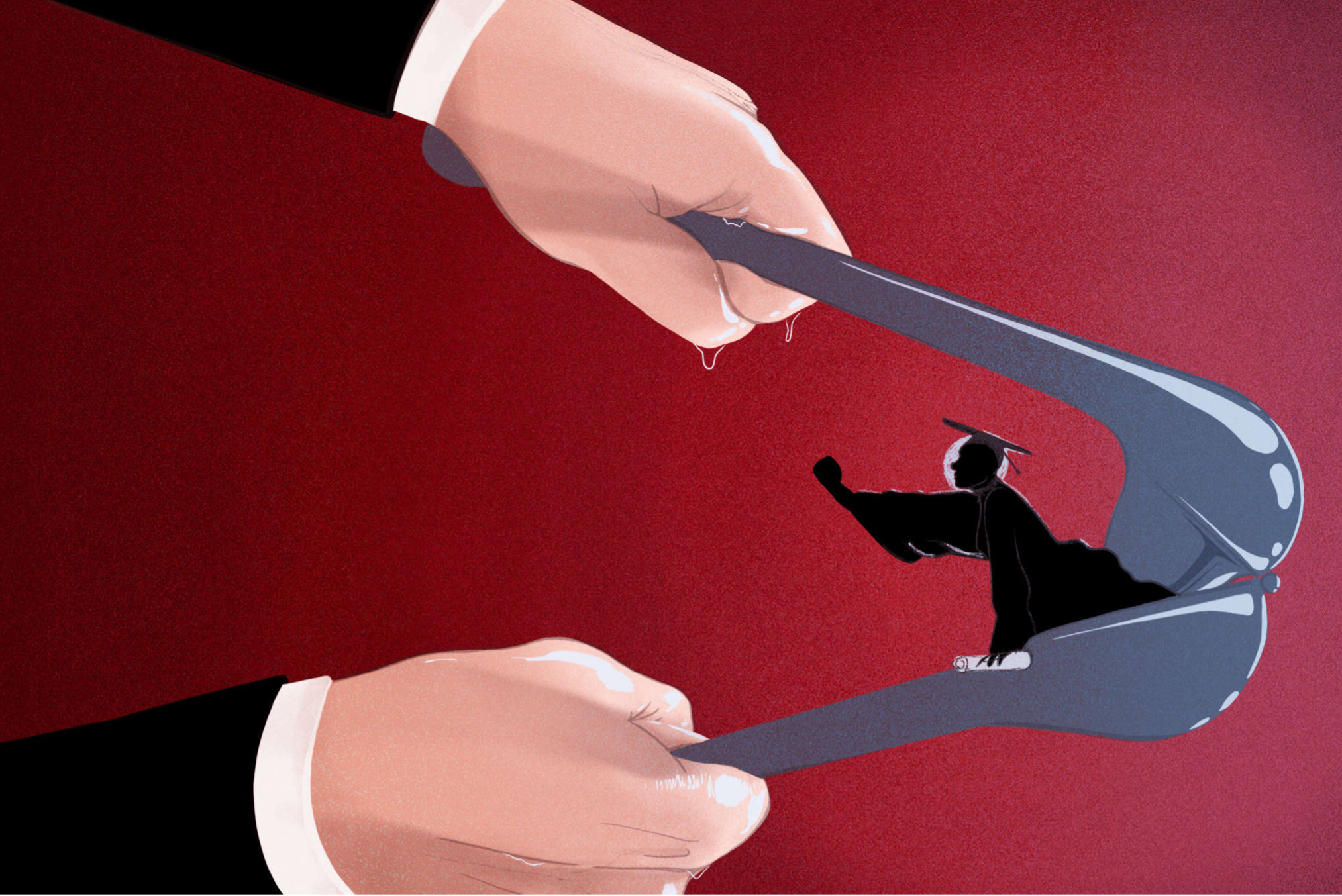
Activist‑scholar Eleanor Finley joins the Srsly Wrong podcast to argue that neighborly love might just be the secret engine of revolution. Direct democracy, she insists, isn’t a dry procedure but a singing, dancing, community‑driven way of life fueled by communal joy and radical mutualism. |
|
In his book, “Untangling the Political Roots of Immigration and Inequality in the United States”, Ron Hayduk argues that mass migration and rising inequality are two sides of the same coin, driven by unchecked capitalism and imperialist intervention. Examining two peak immigration periods (1870‑1925 and 1970‑2025), he uncovers lessons from past worker and immigrant movements for organizers today. |
System Change |
|
Pathways and strategies for the next system |
|
|

Events
|
|
Upcoming events |
 |
|
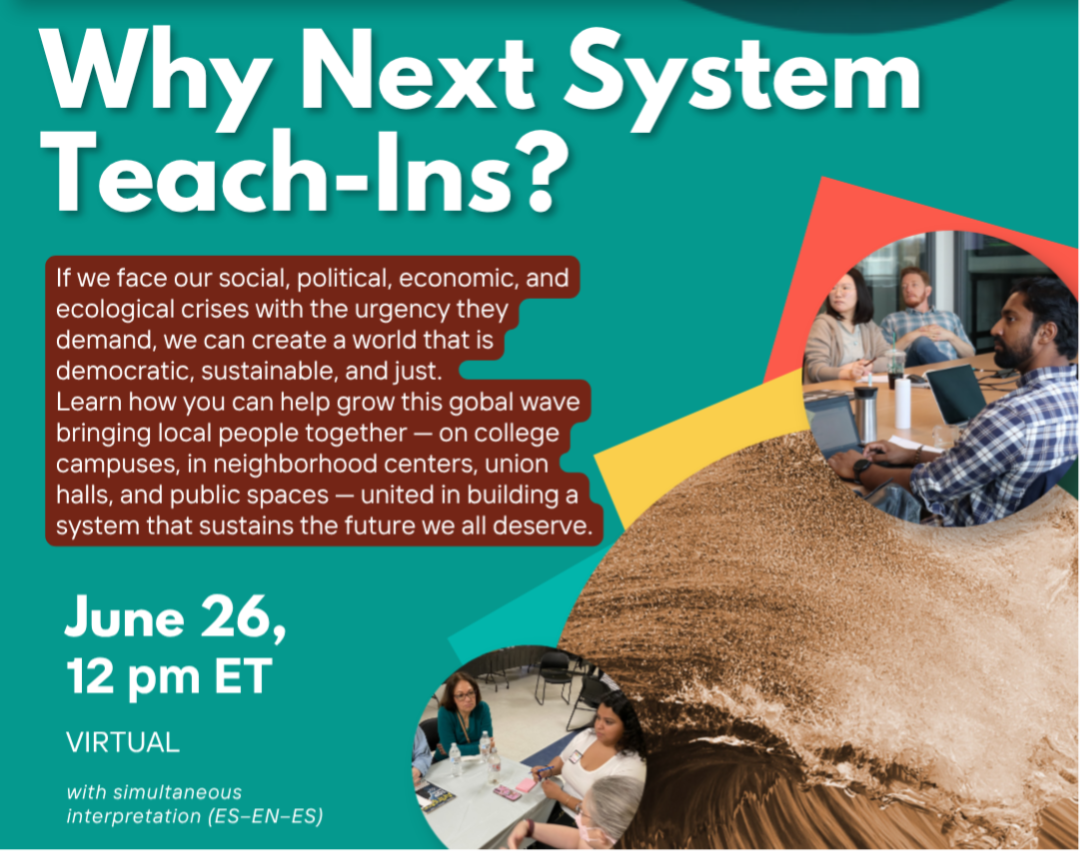
June 26th at 12:00PM ET |
|
If we face our social, political, economic, and ecological crises with the urgency they demand, we can create a world that is democratic, sustainable, and just. Join the second session of the Next System Teach‑In Organizer Workshop Series on June 26th to learn how you can help grow this global wave bringing local people together — on college campuses, in neighborhood centers, union halls, and public spaces — united in building a system that sustains the future we all deserve. Learn more about the full series by visiting our website. |
|
June 13th to June 22nd |
|
This intensive two‑week residential course from the Ulex Project helps experienced organisers step back and see how their own groups fit within the wider “ecology” of social movements, and how those movements in turn connect to broader struggles. Participants deepen their grasp of social‑change theories, movement life cycles and long‑range strategy, while testing new frameworks together through collaborative inquiry and real‑world case studies. |
|
June 2nd to June 4th |
|
Discover how to move from needs‑based problem‑solving to capacity‑driven community building. This three‑day virtual training from the Asset‑Based Community Development (ABCD) Institute (June 2–4, 2026) teaches local leaders and organizations how to identify, nurture, and mobilize existing community assets and talents to create resilient, thriving places. You’ll explore key practices like co‑production, addressing disparities through an ABCD lens, and expanding the circle of people working together toward shared goals. |
|
May 21st to May 24th |
|
The second annual Model Constitutional Convention (MCC) will bring over 100 undergraduate, law, and master’s students together at WashU Law from May 21–24, 2026 to debate and propose amendments in a full‑scale simulation of the Article V process as outlined in the United States constitution. Founded by WashU Law Dean Stefanie Lindquist and directed by Neta Borshansky, the immersive weekend features leading constitutional scholars like Erwin Chemerinsky and Richard Albert, and aims to train the next generation to lead serious conversations about constitutional reform. |
|
Can we build a world that is democratic, sustainable, and just? |
  
|
|
Copyright 2026 Center for Next System Studies. CC BY-NC-SA. With the Next System Tribune we regularly share interesting news and publications from our civic and academic partners. Inclusion in the Tribune does not imply endorsement of all findings, conclusions arrived at, or arguments made. |